How to choose your curtains
How much light each fabric keeps out, which lining to pick, and the four ways the top of a curtain can be made.
- 1
Decide how much light to keep out
Before you measure, decide how much light the room needs to block. Our curtains come in three kinds of fabric, made from premium polyester, poly blends and cotton mixes.
- 100% blackout fabric blocks all light on its own. It is self-lined and needs no extra lining.
- Room darkening fabric lets you choose how much light comes through, with the lining you pick (next step).
- Sheer fabric, such as Swiss dot, is always unlined, so it stays light, airy and translucent.
- 2
Pick a lining for room darkening curtains
Room darkening curtains come three ways:
- Unlined keeps the fabric's natural, light drape and lets soft light filter through.
- Room darkening lining gives the drape more weight and filters light moderately.
- 100% blackout lining turns a room darkening curtain into one that blocks all light.
Blackout and sheer curtains take no extra lining, so you only choose one for room darkening fabric.
- 3
Choose a header style
The header is the top of the curtain, where it meets the rod or track. Every curtain can be made with any of these four:
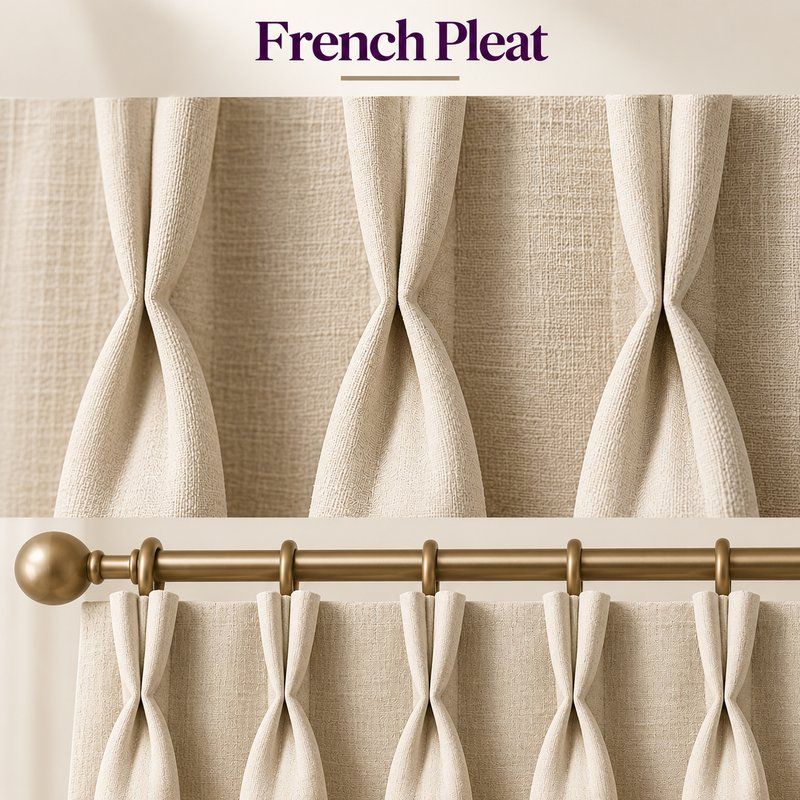
- French pleat (two pinch): two folds gathered at each pleat. Tailored and easy to live with.
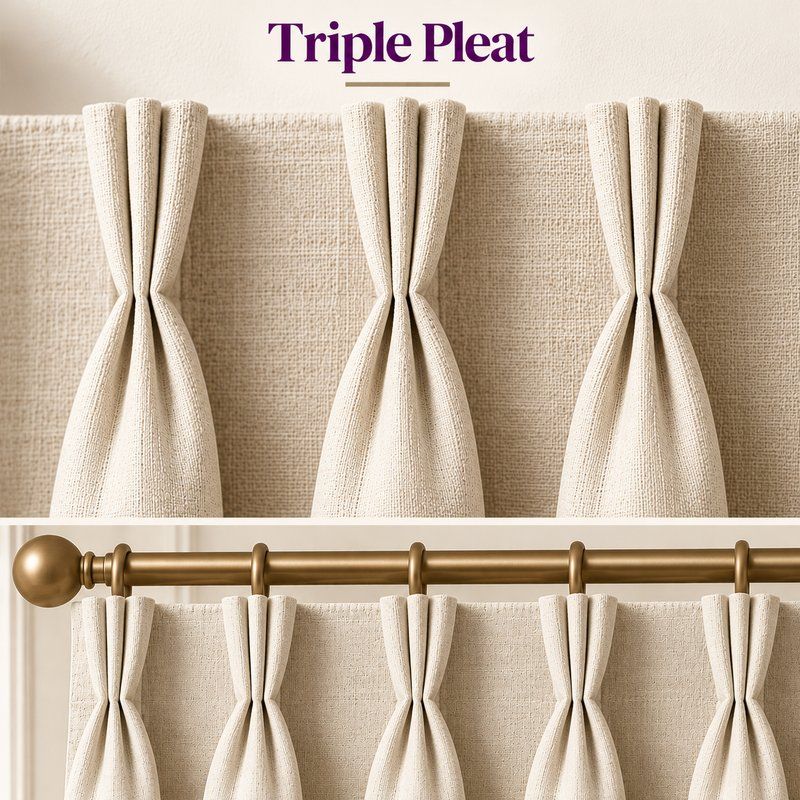
- Triple pleat (three pinch): three folds at each pleat, for a fuller, more formal look.
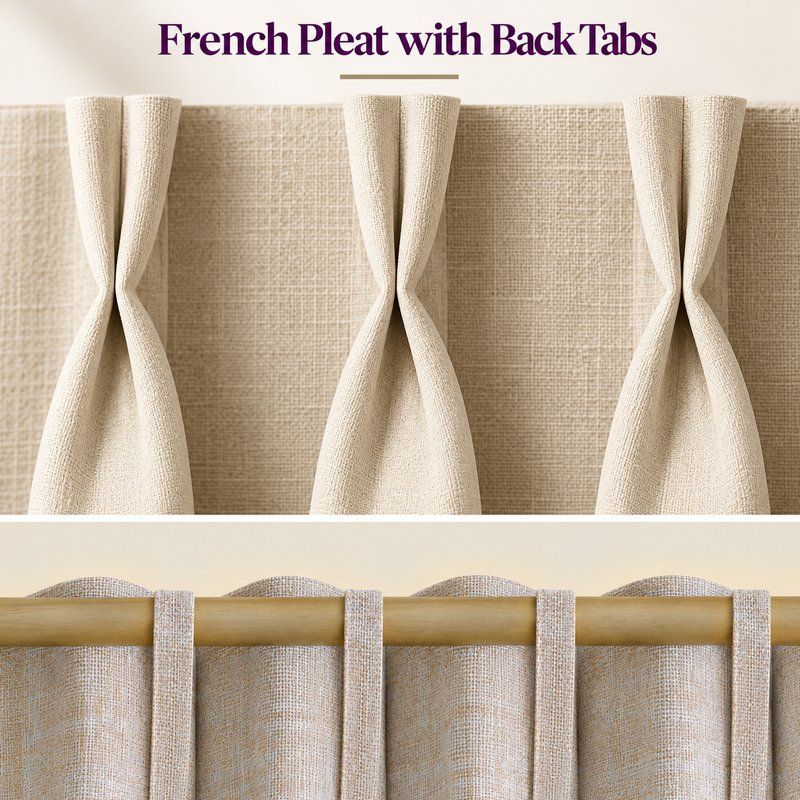
- French pleat with back tabs: two pinch pleats with fabric tabs sewn behind them, so you can hang them on a track, on rings, or straight on the rod.
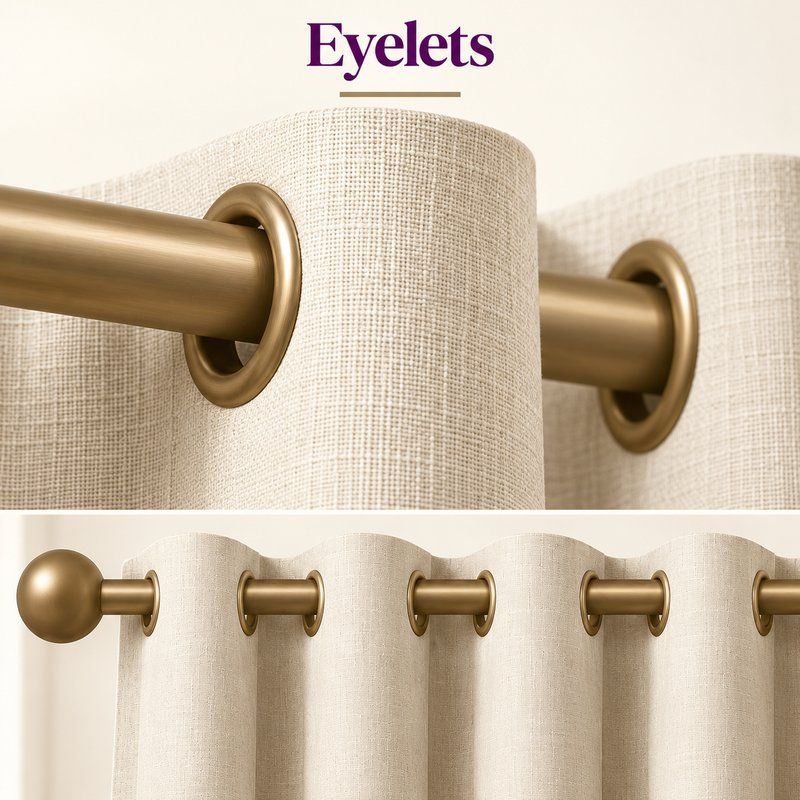
- Eyelets: metal rings set into the top of the curtain slide straight onto the rod and fall in soft, even waves.
The fullness is sewn into the header, so whichever you choose, there is nothing to gather by hand.